
The Indian Army's Air Defence units successfully shot down multiple Kamikaze drones launched by Pakistan after they crossed the International Border in Punjab's Amritsar early Saturday morning. The drones, identified as Byker YIHA III models, were carrying high-explosive payloads and were headed towards densely populated civilian areas. The incident highlights the efficiency of India's multi-layered air-defence system.

Clearances include next-gen air defence, anti-tank missiles, anti-drone systems, loitering munitions, and naval UAVs.

Loitering munitions, often described as 'suicide drones' or 'kamikaze drones', are becoming central to modern warfare because of their ability to hover over target areas, identify threats and strike with high precision.

A tech firm has delivered to the Army 106 turbojet-powered kamikaze drones designed to engage high-value targets deep inside enemy territory and operate in contested electromagnetic environments, according to a statement.

Indian Armed Forces brought down a number of these drones using kinetic and non-kinetic means.

The Indian Army is equipping its infantry battalions with drone platoons and raising elite commando units as part of a modernization drive to enhance combat capabilities along the northern and western frontiers. The Army is also procuring new carbines and upgrading its arsenal with advanced weaponry.

Wing Commander Singh asserted that while all hostile actions have been effectively countered with proportionate responses, India has reiterated its commitment to de-escalation, conditional on reciprocal restraint from Pakistan.

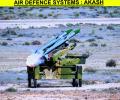
The foremost lesson for India today is to beef up its air defence to cater for multiple drone attacks. As seen in Operation Sindoor, we have come a long way, but there's room for getting better. We must develop a robust and almost impregnable air cover over ourselves, asserts IAF veteran Air Commodore Nitin Sathe (retd).
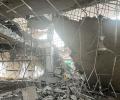
Indian Air Force S-400 Sudarshan Chakra air defence missile systems were fired last night against targets moving towards India. The targets were successfully neutralised in the operation multiple domain experts told ANI.
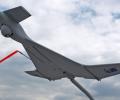
The Israeli-made Harop drone is a powerful weapon that can operate silently in enemy territory and carry a significant payload.
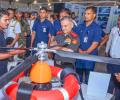
'The defence forces have come up with certain problems they face in the drone space.' 'Recently we had a meeting at which they presented the problems to many of our start-ups and faculty.' 'Some of the start-ups have started working on the problems.'
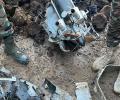
Local residents said a migrant labourer was injured in the incident, while a few houses in the area also sustained damage. Parts of the unidentified object were lying in the area, they said.
It marked a "milestone" in India's journey towards technological self-reliance in military operations, the ministry said on Operation Sindoor.

India on Thursday night swiftly foiled Pakistan's attempts to hit various key Indian installations including military stations at Jammu, Pathankot and Udhampur with drones and missiles, the defence ministry said.

In all likelihood, the next conventional Chinese attack on India would be preceded by a massive cyber attack designed to cripple Indian networks and interfere with our disaster-relief programmes.

Around 75 drones of the Indian Army carried multiple mock operations, including kamikaze attacks, first-aid delivery and parachute payload delivery exercises, at the event.

What must India do now?
